By Zuwaira Ayitogo O.
The National Information Technology Development Agency (NITDA) has reaffirmed its commitment to driving widespread technology adoption across Nigeria as the Federal Government intensifies efforts to implement a robust and secure digital identity system.
The Director-General of NITDA, Kashifu Inuwa Abdullahi, CCIE, made this known during a courtesy visit by the National Identity Management Commission (NIMC) to the Agency’s headquarters, where he emphasised NITDA’s responsibility as the apex IT regulator in the country.
“As an apex IT agency, our work is to make sure every Nigerian adopts and uses technology. We are committed to working with you and anybody trying to adopt technology in this country,” the DG stated.
Inuwa noted that NITDA’s role extends beyond regulation to fostering collaboration, supporting innovation, and ensuring that digital solutions are accessible and inclusive for all Nigerians. He added that the Agency remains committed to partnering with institutions such as NIMC to strengthen Nigeria’s digital ecosystem and accelerate its transition to a fully digital economy.
Highlighting the importance of Digital Public Infrastructure (DPI), he described it as a critical enabler of economic growth, stressing that, just like physical infrastructure, digital systems must be reliable, secure, and widely accessible.
He also congratulated NIMC for achieving what he described as a significant milestone, commending the Commission’s leadership for their efforts in driving the successful enactment of the new Act.
The engagement also featured insights from the Director-General/CEO of the National Identity Management Commission (NIMC), Engr. (Dr) Abisoye Coker-Odusote, who highlighted the transformative provisions of the newly enacted Act, which replaces the 2007 framework after nearly two decades.
Engr. Coker-Odusote explained that the new law represents a coded and carefully structured transition from a traditional identity database system to a comprehensive digital identity ecosystem. The Commission explained that this shift is designed to ensure interoperability, security, and efficiency in identity verification processes across both public and private sector platforms.
She further noted that the Act repositions the Commission as a foundational digital authority, moving from card-based identity systems to secure digital credentials that support seamless online and offline transactions.
She maintained that the new framework is anchored on the principle of one person, one identity, ensuring that every Nigerian has a unique and verifiable digital identity. It also provides legal backing for the implementation of Public Key Infrastructure (PKI) and other trust frameworks critical to secure digital interactions.
The Commission emphasised that the transition is being implemented in phases to guarantee stability and continuity while safeguarding citizens’ data and enhancing trust in government digital services.
Both NITDA and NIMC underscored the importance of collaboration in achieving Nigeria’s digital transformation goals. While NIMC provides the backbone for digital identity, NITDA will continue to drive adoption, regulation, and ecosystem development.
The alignment between the two agencies signals a major step towards building a secure, inclusive, and innovation-driven digital economy, where every Nigerian can participate in and benefit from the opportunities enabled by technology.
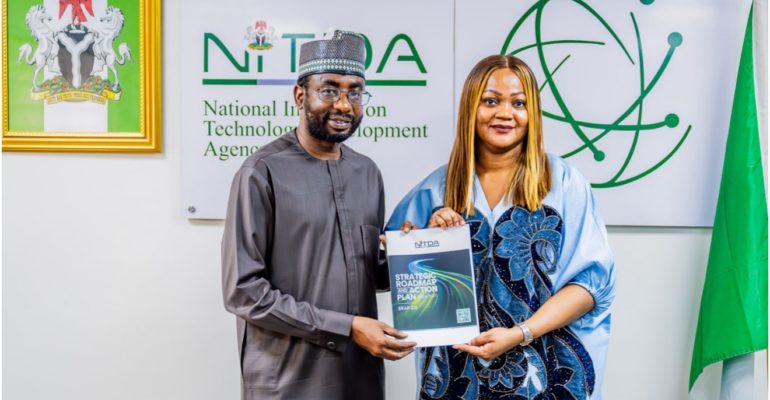
A major highlight of the event was the formal handover of the Public Key Infrastructure (PKI) framework to the National Identity Management Commission (NIMC). Speaking at the event, Inuwa described the move as a demonstration of the Agency’s commitment to collaborating with NIMC and other institutions willing to leverage technology to drive national development.
“We have done significant work around PKI and Digital Public Infrastructure (DPI). We will collaborate closely with your team as we hand over all our activities around it to the Commission, including the PKI infrastructure we have developed,” Inuwa stated.
Public Key Infrastructure (PKI) is a robust framework that enables the creation, management, verification, and authentication of digital identities through digital certificates. It plays a critical role in ensuring secure, trusted, and encrypted digital communications and transactions.
The handover aligns with the recent re-enactment of the National Identity Management Commission (NIMC) Act, signed into law by President Bola Ahmed Tinubu. The Act seeks to establish a modern, secure, and integrated digital identity ecosystem for Nigeria by harmonising identity databases across government agencies and positioning the National Identification Number (NIN) as the cornerstone of identity verification, authentication, and public service delivery. This framework is expected to enhance national security, improve service efficiency, and accelerate the country’s digital transformation agenda.