By Naeemah Junaid
The National Information Technology Development Agency (NITDA) has expressed readiness to strengthen collaboration with the Centre for Inclusive Development (CID) to promote digital accessibility and ensure that persons with disabilities are not excluded from Nigeria’s digital transformation.
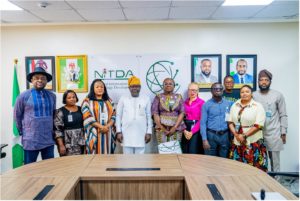
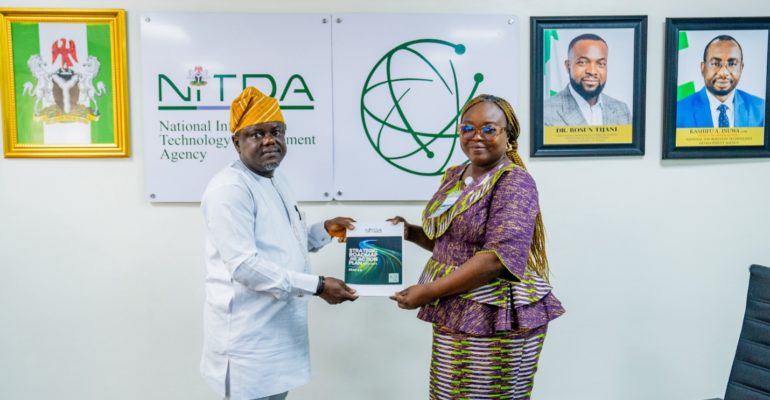
The commitment was made when CID paid a courtesy visit to NITDA to present findings from its research on digital accessibility for persons with disabilities and explore opportunities for stronger standards and greater inclusion in Nigeria’s digital ecosystem.
Representing the Director General of NITDA, Dr Ayodeji Eniola, Director, Corporate Planning and Strategy, said the findings were consistent with the Agency’s mandate of ensuring that no Nigerian is left behind in the country’s digital transformation.
Inuwa said NITDA’s digital literacy drive, which targets 70 per cent digital literacy nationwide by 2027, was being implemented across schools, the informal sector and the workforce.
He said the Agency was particularly interested in ensuring that digital skills and access were extended to Nigerians irrespective of their status.
The DG noted that the Agency will be interested in working with CID to ensure that it deepens ongoing efforts to ensure that digital skills are effectively cascaded to all Nigerians, irrespective of their status.
Inuwa said there was need for stronger measures to ensure that digital technologies serve every Nigerian.
The DG added that NITDA had already identified gaps relating to persons with disabilities in its digital literacy framework and commenced efforts to address them.
He disclosed that the development of national accessibility standards was among the issues the Agency would seek to advance, while noting that accessibility considerations had already been incorporated into NITDA’s revised website guidelines for government institutions.
Inuwa reaffirmed the Agency’s willingness to deepen collaboration with the Centre, particularly in the areas of digital literacy and accessibility.
The engagement underscored the growing need for accessibility to remain a central component of Nigeria’s digital transformation, with both organisations expressing readiness to explore practical measures that will enable persons with disabilities to participate more independently and securely in the digital economy.
Presenting the research findings, Ms Tracy Onabis Agbamu, Nigerian disability rights advocate, lawyer and researcher, disclosed that the study audited about 30 government digital platforms, with only 47 per cent meeting the required accessibility threshold.
She, however, identified NITDA among the platforms that performed strongly in the assessment, attributing the performance to the Agency’s efforts towards digital inclusion.
The study also uncovered considerable accessibility challenges on private-sector platforms, particularly in the banking, fintech and payment sectors.
According to her, such barriers could compel persons with disabilities to depend on third parties to access digital financial services, potentially exposing them to privacy and security risks.
Agbamu noted that digital inclusion goes beyond equipping citizens with digital skills, stressing that digital platforms must also be designed to support assistive technologies and independent access.
To address the identified gaps, Agbamu called for NITDA’s intervention in developing guidance on accessibility statements for government websites, integrating accessibility requirements into procurement and licensing frameworks, and promoting accessibility standards across critical sectors.
It also sought NITDA’s technical support for the development and validation of a national digital accessibility standard for Nigeria.