By Naeemah Junaid
The National Information Technology Development Agency (NITDA) and the National Hajj Commission of Nigeria (NAHCON) have renewed their commitment to deploying digital technology to enhance Hajj administration, improve operational efficiency and strengthen service delivery to Nigerian pilgrims.
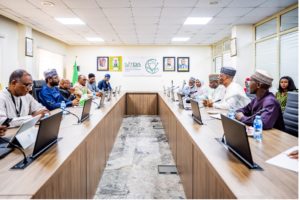
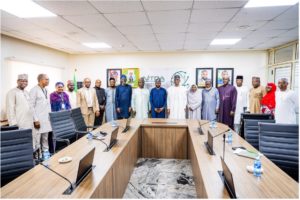
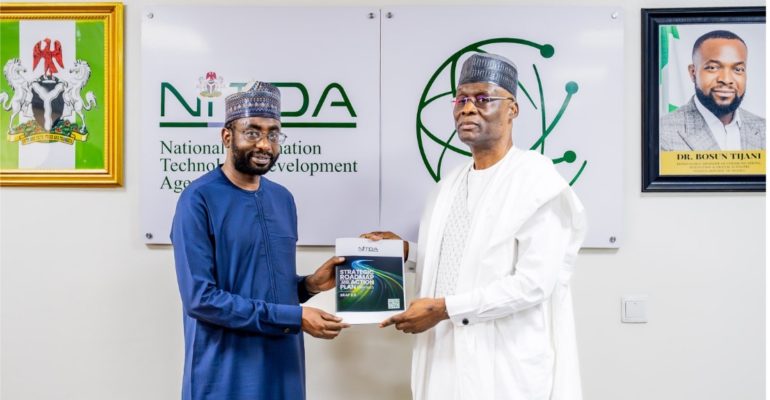
The commitment was reached when the Chairman of NAHCON, Ambassador Ismail Abba Yusuf, led a delegation of the Commission on a strategic visit to NITDA headquarters in Abuja, where he met with the Director-General of the Agency, Kashifu Inuwa Abdullahi, CCIE.
The engagement focused on strengthening technical cooperation between the two institutions and exploring practical ways of integrating technology across the various stages of Hajj operations.
Speaking during the meeting, Inuwa said NITDA was ready to support NAHCON in building a more coordinated and sustainable digital framework for Hajj administration.
He noted that the complexity of Hajj operations, which involves registration, payments, aviation, accommodation, transportation, feeding, healthcare and the movement of large numbers of pilgrims, required systems capable of working together seamlessly.
The NITDA DG cautioned against treating digital transformation as a one-time technology project, stressing that sustainable transformation required continuous improvement and institutional commitment.
“Digital transformation is not a one-off project. It is a journey and a journey that needs constant improvement,” he said.
Inuwa explained that technology should be deployed as an enabler of institutional objectives and not as an end in itself.
“Digital transformation is not just about technology. It is about your business value proposition. It is about the business, not technology. Technology enables you to deliver your business objectives,” he added.
He urged NAHCON to address the challenge of siloed systems by developing an integrated digital architecture that would allow information to move efficiently across different aspects of Hajj administration.
According to him, an integrated system would provide end-to-end visibility of operations, improve coordination and enable management to make timely, data-driven decisions.
The NITDA DG also drew attention to the growing relevance of artificial intelligence and intelligent digital systems, noting that emerging technologies could provide new opportunities for improving institutional processes and service delivery.
He recalled NITDA’s previous support to NAHCON in areas including training and process documentation, expressing the Agency’s readiness to build on the existing relationship through renewed technical collaboration.
Inuwa further encouraged the Commission to explore Public-Private Partnership (PPP) models in implementing major digital projects, noting that such arrangements could attract private-sector expertise and investment while reducing the financial burden on government.
He said NITDA would also continue to promote quality and value for money in government technology projects through proper system design, certified implementation and independent quality assurance.
On capacity development, the DG assured NAHCON of the Agency’s readiness to support training for ICT personnel and digital orientation for state coordinators and other stakeholders involved in Hajj administration.
He stressed that successful digital transformation must become embedded in the institution and should not depend on the tenure of individual officials.
“It is not about the board. It is not about just the chairman. It is about the institution,” Inuwa said.
Earlier, the NAHCON Chairman, Ambassador IsmailIsmail A. Yusuf, said the Commission’s visit was prompted by the need to accelerate the digitalisation of Hajj arrangements in Nigeria and align its operations with global best practices.
Yusuf noted that Saudi Arabia had made significant advances in the digital management of Hajj, adding that Nigeria needed to strengthen its systems to improve coordination and service delivery.
While acknowledging the progress already recorded by NAHCON, he said several processes remained manual and required further automation and integration.
“We’re trying to digitise Hajj arrangements in line with global best practice,” the Chairman said.
He explained that NAHCON was seeking NITDA’s technical expertise in areas such as system assessment, capacity building, process improvement, data management and the integration of existing digital platforms.
The Chairman said closer cooperation with NITDA would help strengthen the Commission’s digital infrastructure and ensure better coordination of information between Nigerian and Saudi systems.
“That is why our cooperation with NITDA is very, very important, that we work together. We are on the same page in everything we do. We compare notes and all that,” he said.
Presenting an overview of NAHCON’s digital solutions, the Commission’s Head of ICT, Shehu Raji said several platforms had been developed in-house despite budgetary constraints.
These include electronic registration, package and programme management, aviation management, automated flight manifests, seating distribution, real-time logistics, accommodation allocation, feeding management, electronic medical records, passport release management and the Hajj Companion application.
He said the Hajj Companion application provides pilgrims with mapped information on accommodation and major Hajj locations in Makkah, Madinah, Mina and Arafat, helping them navigate the various sites during the pilgrimage.
However, Raji noted that some of the systems were only partially deployed and required further development, integration and technical support.
He said improved interoperability would eliminate unnecessary duplication of data entry, enhance data accuracy and facilitate better coordination of pilgrim information.
Raji also emphasised the importance of data security and integrity, noting that reliable information was critical to effective accommodation, transportation, security and other Hajj arrangements.
At the conclusion of the engagement, both institutions agreed to strengthen their partnership through technical collaboration, capacity building, system integration, process improvement and quality assurance.
The two organisations also agreed on the proposed establishment of a technical working group to coordinate priority areas and ensure sustained engagement.
The renewed partnership is expected to advance the development of a more integrated, secure and efficient digital Hajj ecosystem in Nigeria, while improving accountability, reducing manual processes and enhancing the overall experience of Nigerian pilgrims.