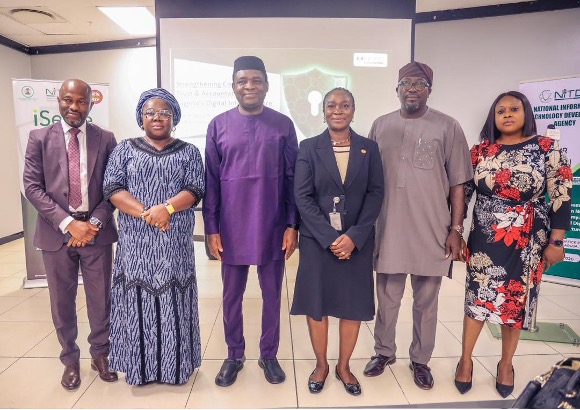
By James Ishaku

The National Information Technology Development Agency (NITDA), in collaboration with the Borno State Information and Communication Technology Development Agency (BICTDA), has reaffirmed its commitment to accelerating digital transformation and strengthening Nigeria’s innovation ecosystem as part of efforts to drive sustainable economic growth.

The statement was made at the NITDA- Borno State IT Stakeholders’ Engagement and ICT Ecosystem Development Program held in Maiduguri, themed “Creating Opportunities, Breaking Boundaries: Towards Digitalization and Entrepreneurial Evolution.”

Speaking at the event, the Director-General of NITDA, Kashifu Inuwa, represented by the Director of Zonal Office Coordination, Mr. Ajayi Babajide, described Nigeria’s current economic phase as a critical turning point where digital transformation has become central to diversification, job creation, and long-term resilience.

He noted that the digital economy now serves as a major driver of national competitiveness, stressing the need for stronger collaboration between federal and state institutions to ensure inclusive digital development.

Inuwa explained that NITDA’s Strategic Roadmap and Action Plan (SRAP 2.0), alongside the National Digital Literacy Framework (NDLF), continues to guide efforts to equip citizens—particularly those in underserved communities—with essential digital skills. He added that the agency has expanded ICT centres nationwide and continues to support innovation and entrepreneurship through capacity-building initiatives.

According to him, sustaining these interventions requires deeper state-level engagement and effective domestication of national policies. He identified key areas of collaboration with Borno State to include expanding community digital literacy, strengthening startup ecosystems through funding and mentorship, and building stronger partnerships between government, academia, and the private sector.

He also referenced the roles of the Office for Nigerian Digital Innovation (ONDI) and the National Centre for Artificial Intelligence and Robotics (NCAIR) in supporting startups through incubation, training, and acceleration programmes, noting that Nigeria’s innovation ecosystem is increasingly producing globally competitive enterprises.

For Borno State, he said, digitalisation presents opportunities to diversify the economy, create employment for youths and women, enhance governance, and bridge the urban-rural digital divide.

Delivering the keynote address, Governor Babagana Umara Zulum, represented by the Permanent Secretary, Administration, Parastatals and General Services, Barrister Garba Musa Chibok, said digital transformation is now a necessity for rebuilding institutions and ensuring sustainable development.

He noted that Borno State is not only recovering from past challenges but actively redesigning its governance systems through technology and innovation. According to him, meaningful progress in the digital space depends on strong collaboration among government, private sector players, civil society, and development partners.

Governor Zulum highlighted achievements in digital inclusion, including expanded access to education, healthcare, and public services through technology-driven initiatives. He also pointed to ongoing training programmes aimed at improving digital literacy and economic participation among citizens.

However, he raised concerns over access gaps, infrastructure deficits, and cybersecurity risks, calling for sustained investment to bridge connectivity challenges across rural and urban communities.

Also speaking, the Executive Secretary of BICTDA, Engr. Mohammed Kabir Wanor, reaffirmed the state’s commitment to mainstreaming digital transformation across governance and economic planning.

He described the engagement as a strategic platform for translating digital policy into measurable development outcomes, stressing that ICT must be fully integrated into service delivery systems to achieve meaningful impact.

Engr. Wanor commended NITDA for their support in expanding digital literacy and innovation initiatives, noting that thousands of young people, women, and public servants have benefited from skills development programmes designed to enhance productivity and employability.

He further highlighted ongoing investments in ICT infrastructure, e-learning platforms, and innovation hubs, describing them as critical to building a sustainable digital ecosystem.

On cybersecurity, he stressed the importance of aligning digital expansion with strong protective frameworks to safeguard data and public trust, while calling for stronger collaboration to deepen digital inclusion nationwide.

The programme ended with renewed commitments from stakeholders to strengthen partnerships and accelerate the growth of a resilient, innovation-driven digital economy in Borno State and Nigeria at large.

Other dignitaries who also addressed the event included the Permanent Secretary, Ministry of Information and Internal Security, Aminu Chamaruwa; the Permanent Secretary, Administration and Head of Service, Hajiya Iyabawa; and the Chairman of the BICTDA Board, Dr. Idris Yelwa, among others, who all contributed to discussions on strengthening the state’s digital ecosystem and advancing ICT-driven development.

Leave a Comment

12 − 12 =